
A furniture collection can look straightforward from the outside: an armchair becomes a two-seater, a high-back version is added, perhaps a table or stool follows. But a well-developed collection isn’t simply the same design repeated at different sizes. Its value lies in creating a recognizable visual language that can move through an interior while adapting to the different ways each space needs to be furnished.
Consistency without repetition
Large interiors rarely need one type of seating. A reception area may call for upright seating. A quieter lounge space might suit deeper upholstered pieces. Elsewhere, occasional tables, stools, high-back seating or larger sofas may be needed. Specifying each area independently can work, but it also creates a challenge: how do those individual choices still feel as though they belong to the same interior? A furniture collection provides one answer. Common proportions, materials, leg profiles, upholstery details or forms can create a visual connection between pieces without requiring them to be identical. The result is consistency without repetition.
A design language can stretch
One of the more difficult parts of developing a collection is deciding which elements define it. It might be the angle of a leg, the shape of an arm, the way upholstery wraps around a frame or simply the relationship between curves and straight lines. Those details establish the character of the original design. Expanding it into a collection means carrying enough of that character into each new piece for the relationship to remain visible, while allowing the furniture to change where its function requires it. A lounge chair shouldn’t simply be an enlarged dining chair. A high-back chair isn’t necessarily successful because a taller back has been attached to an existing frame. Each piece needs to work in its own right. The challenge is making them feel related without making them feel duplicated.
More options within one interior
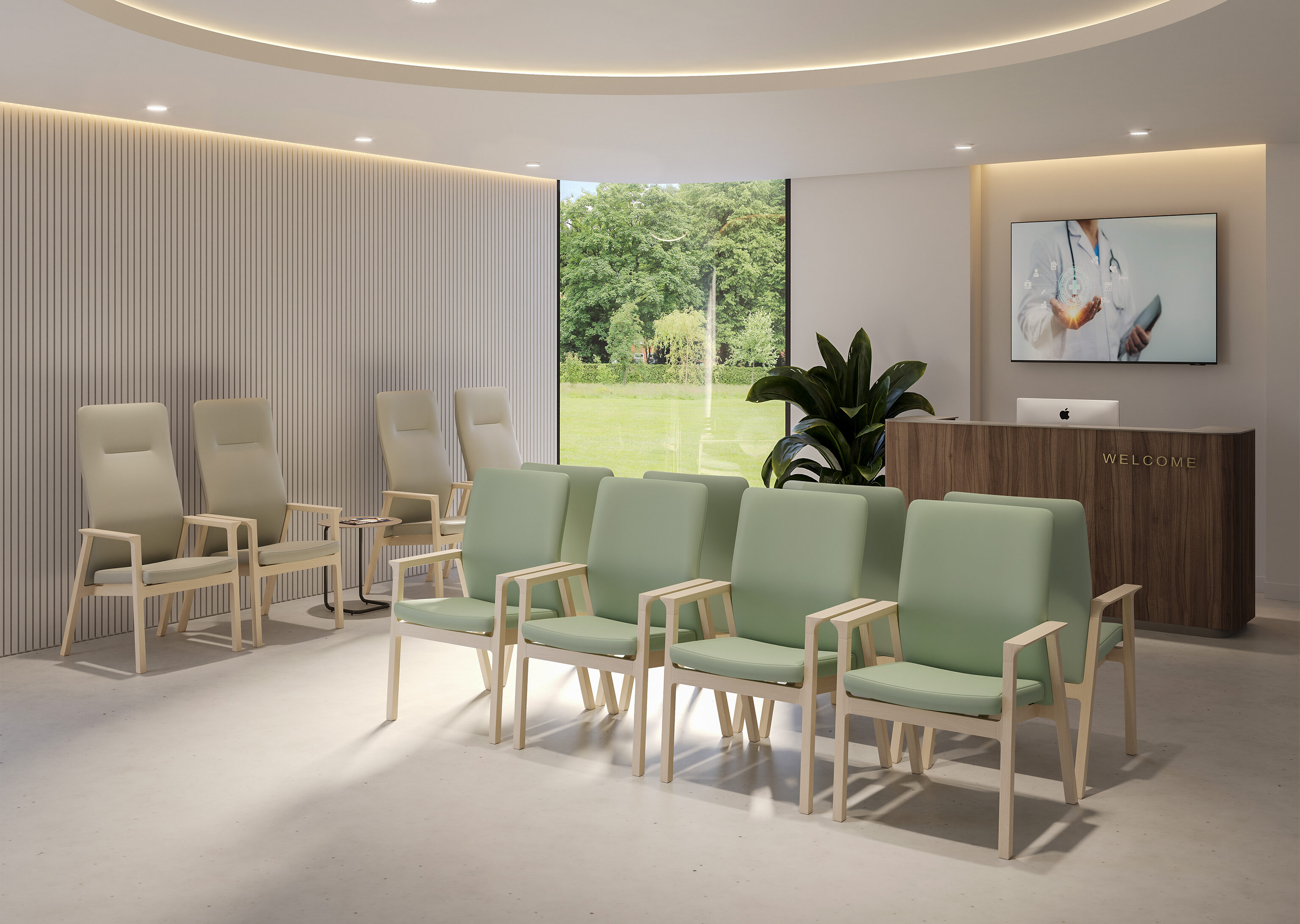
For interior designers and specifiers, that creates flexibility.Different areas of a project can require different furniture types while still sharing a broader design direction. A collection might allow upright seating in one area to sit comfortably alongside deeper lounge seating elsewhere. Tables can repeat timber details found in chairs. Upholstery choices can introduce variation while the underlying forms maintain continuity. Even within a single collection, changing fabrics, finishes and configurations can create distinction between spaces without losing the connection between them. This can be particularly useful across larger healthcare interiors, where multiple spaces need their own purpose and identity while remaining part of one overall environment.
Not everything needs to match
A cohesive furniture scheme doesn’t mean specifying one collection from one end of a building to the other. In fact, doing so can have the opposite effect, making spaces feel overly uniform. Collections can instead provide an anchor. A recognizable design language can be repeated where continuity is useful and combined with complementary pieces where a different scale, function or visual character is needed. The aim isn’t to make everything match. It’s to give different elements enough in common that they feel considered together.
Designing the relationship between pieces
Individual products naturally receive much of the attention in furniture design. But interiors aren’t experienced as a series of isolated product decisions. Chairs sit beside tables. Upright seating transitions into lounge areas. Materials and forms appear, disappear and reappear as people move through a building. A successful collection considers those relationships from the beginning. Because sometimes the most important thing about a piece of furniture isn’t only how well it works on its own. It’s how well it works with everything around it.

